WEIGHT
Minimums keep rising
The Flat minimum went from 7st 10lb to 7st 12lb in 2002, 8st in 2013 and 8st 2lb in 2022. Over Jumps it rose to 10st 2lb.
Check the weights doodlejockey
Start
WHAT THE RULES AND RESEARCH SAY
Every horse in a race carries a set weight.

Jockeys are unusual athletes: they must hit a set weight, sometimes several times a day. British racing has raised its minimum weights and closed racecourse saunas, and research helped explain why.
8ST 2LBFlat minimum
Check the weightsKeep in mind
THE SHORT ANSWER
Horses carry set weights in each race.
The rules around them have changed for welfare.
WEIGHT
The Flat minimum went from 7st 10lb to 7st 12lb in 2002, 8st in 2013 and 8st 2lb in 2022. Over Jumps it rose to 10st 2lb.
Check the weightsCOLOURS
Racing colours began as a practical way to tell horses apart in the distance. The Jockey Club began a register in the 1760s to stop owners duplicating them.
Read the historySAFETY
Jockeys get a 3lb allowance for safety equipment, introduced when a Level 2 body protector became a requirement.
How weights workA QUICK WEIGHT CHECK
Pick a type of race to see the weight limits in British racing since 2022. The bar shows how heavy that limit is compared with the others.
Limits for weights carried in British races. Individual race conditions set the weights within them.
TWO NUMBERS WORTH KNOWING
Both figures come from Liverpool John Moores
University's research with professional jockeys.
2%
Body weight lost by dehydrating that impaired riding
In simulated race-riding, acute dehydration of 2% of body weight impaired riding performance and reduced muscle strength, which the researchers concluded could increase the risk of falls.
DEHYDRATION · LJMU
up to 362
Days a year jockeys can race-ride
Great Britain has about 450 licensed jockeys, who can race-ride on up to 362 days a year thanks to all-weather tracks, and must make weight daily, sometimes several times a day.
THE RACING YEAR · LJMU
The same research found race-riding itself uses little energy, about 40 kcal per race, and that jockeys could make weight safely by eating regularly rather than relying on rapid dehydration and forced sweating.
HOW RIDING WEIGHTS WORK
Weights carried in British races sit within limits set by the British Horseracing Authority, with a few allowances on top.
Step 1
Weights sit between the minimum and the top weight for that type of race, 8st 2lb to 10st 2lb as standard on the Flat.
Step 2
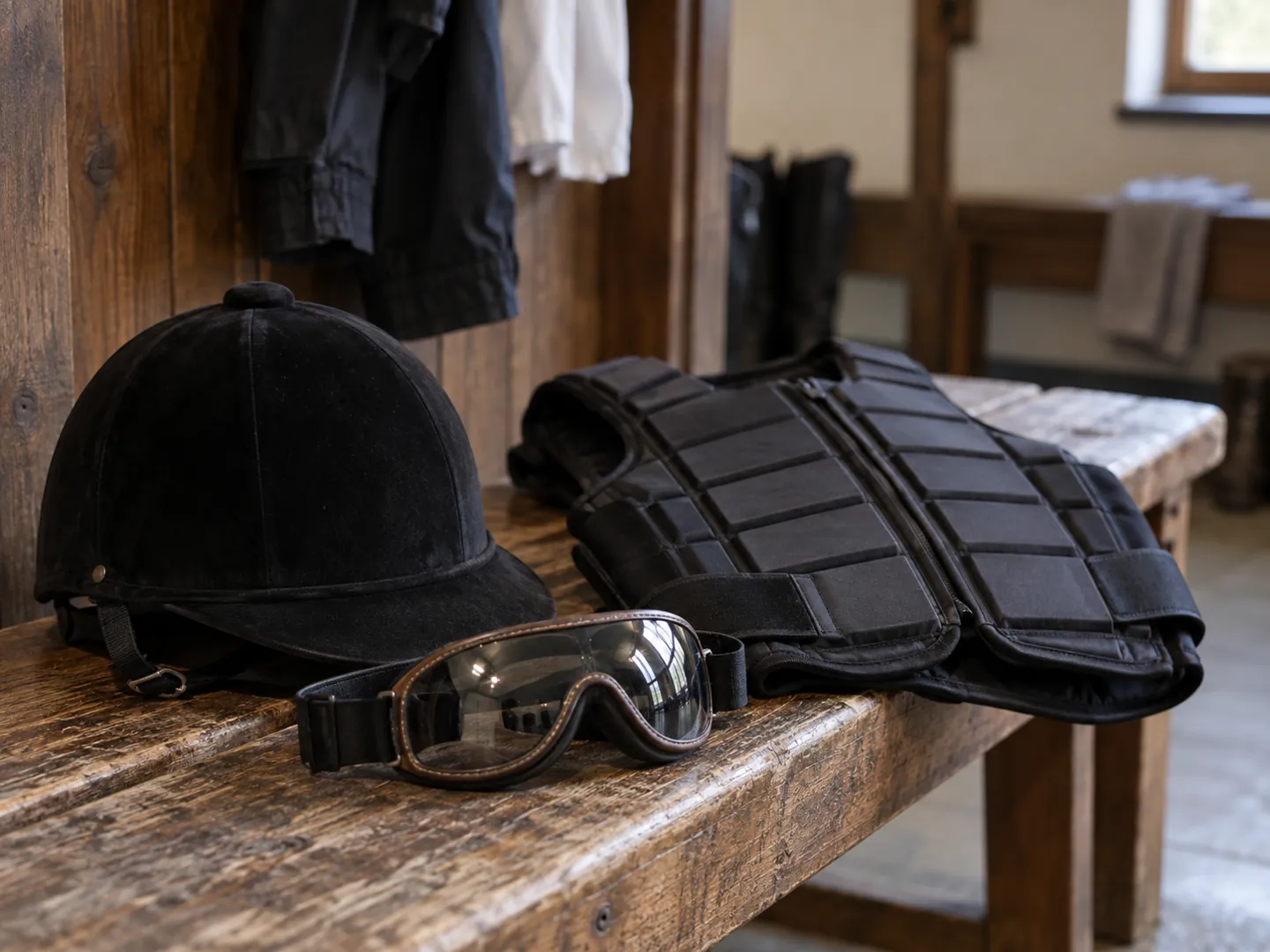
A 3lb allowance covers safety equipment, and Flat jockeys get a further 1lb in winter for an extra warm layer, a rule in place since 2013.
Step 3
Saunas have been permanently removed from racecourse weighing rooms, after jockeys backed ending their use on race days.
Step 4
The BHA said in 2022 its Chief Medical Adviser would lead work on individual minimum weights for jockeys.
WHERE RACING COLOURS CAME FROM
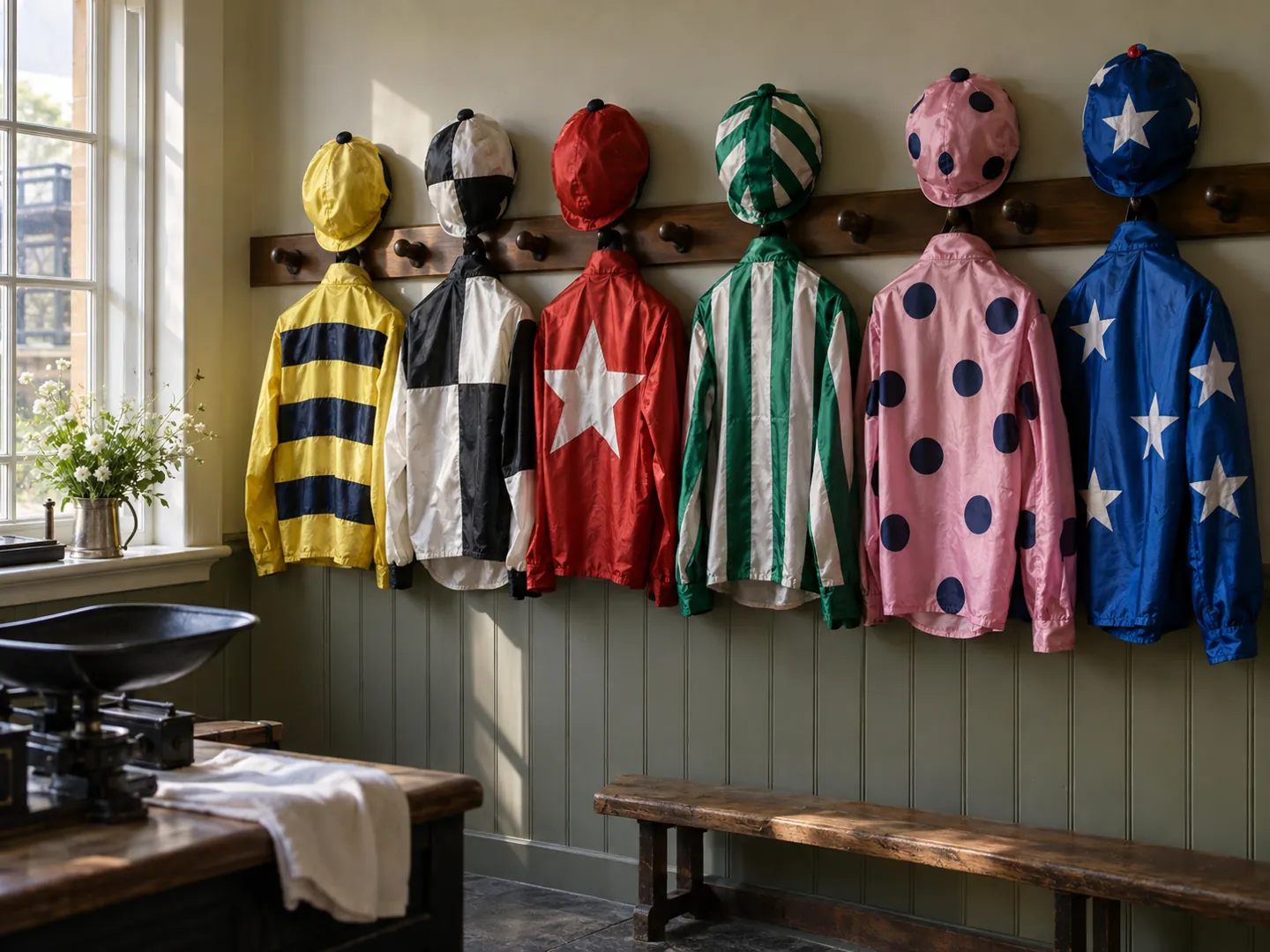
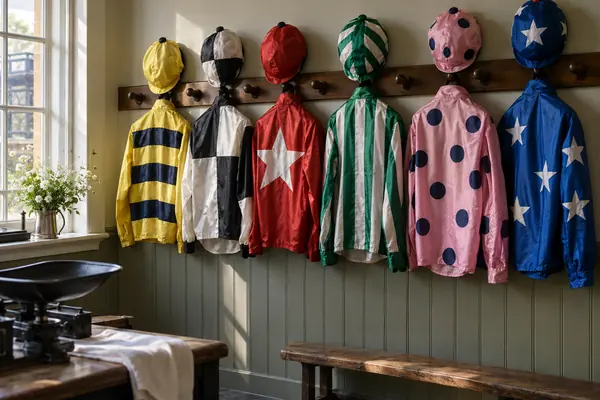
On long, straight courses such as Newmarket, distinctive jackets and caps were the only way spectators could tell who was who. Owners guarded their colours, and in the 1760s the Jockey Club began keeping a register to avoid duplicates.
Pure silk has long since given way to nylon, polyester satin or lycra, worn over safety vests and helmets. Designs use halves, quarters, hoops, stripes, spots and stars, and each racing country keeps its own register so no two owners there share the same colours.
Questions
Since 2022 the minimum weight carried is 8st 2lb in Flat races and 10st 2lb in Jump races, with allowances for safety equipment and, on the Flat, winter clothing.
The BHA has described the rises as jockey welfare measures. In 2012 it noted the average weight of the British population was rising, and in 2022 it raised weights after racecourse saunas were permanently closed.
Reaching the set weight for a ride. LJMU research found some jockeys had used harmful methods such as dehydration, and that even 2% dehydration impaired riding performance and strength.
Yes. A 3lb allowance for safety equipment was introduced when a Level 2 body protector became compulsory, and Flat jockeys get a 1lb allowance in winter for warmer clothing.
So horses can be told apart at a distance. Owners register their colours; in Britain a register began with the Jockey Club in the 1760s, and each racing jurisdiction keeps its own.
A jockey has to make the weight their horse is set to carry. Since 2022 the standard range in British racing is 8st 2lb to 10st 2lb on the Flat and 10st 2lb to 12st over Jumps, so jump jockeys ride heavier than Flat jockeys.
Destination
Updated
ABOUT THIS NAME
doodlejockey.com is part of the DoodleSale portfolio. It isn't in an auction right now, but you can ask about leasing it.